Canada
 USA
USA Japan
Japan

Why Cabled Solar Lighting Offers Design Flexibility

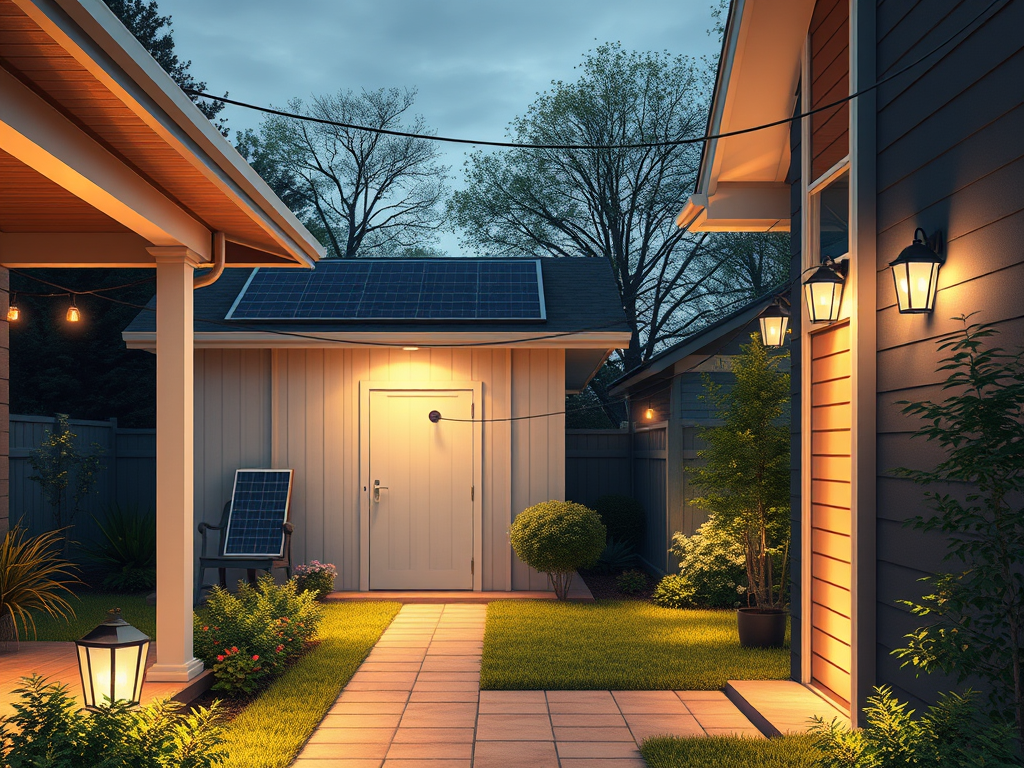
We’ve been conditioned to think of solar lights as single, monolithic objects. The breakthrough mindset is to think of them as systems: a solar power plant (the panel), an energy reservoir (the battery), and a light emitter (the fixture). These three components do not need to be physically joined. Once you embrace this, every shaded nook on your property becomes a candidate for brilliant, off-grid light.
This is the power of the cabled system. A central, high-output solar panel (perhaps 20W or more), mounted in your sunniest location, charges a substantial battery bank or powers multiple lights directly via cable runs. These cables carry low-voltage DC power (typically 12V or 24V), which is safe to handle and requires no conduit. You can then place professional-grade LED fixtures anywhere along that cable run: in the dense shade of a cedar tree, under a deep porch overhang, inside a garden shed, or along a north-facing wall that never sees direct sun.
This approach solves the aesthetic problem, too. You can use beautiful, design-forward light fixtures that match your home’s style—ones that were never designed with a bulky solar panel on top. The solar hardware becomes a utility, discreetly placed out of sight (on a roof, shed side, or pole), while the beauty of the light takes center stage. It’s how high-end landscape lighting has always worked, just with the grid-tied transformer replaced by a solar panel. It requires more planning and initial investment, but it delivers a perfect, permanent, and professional result that truly frees you from the tyranny of the electrical outlet.