Canada
 USA
USA Japan
Japan

Maximize Solar Panel Performance with Strategic Orientation

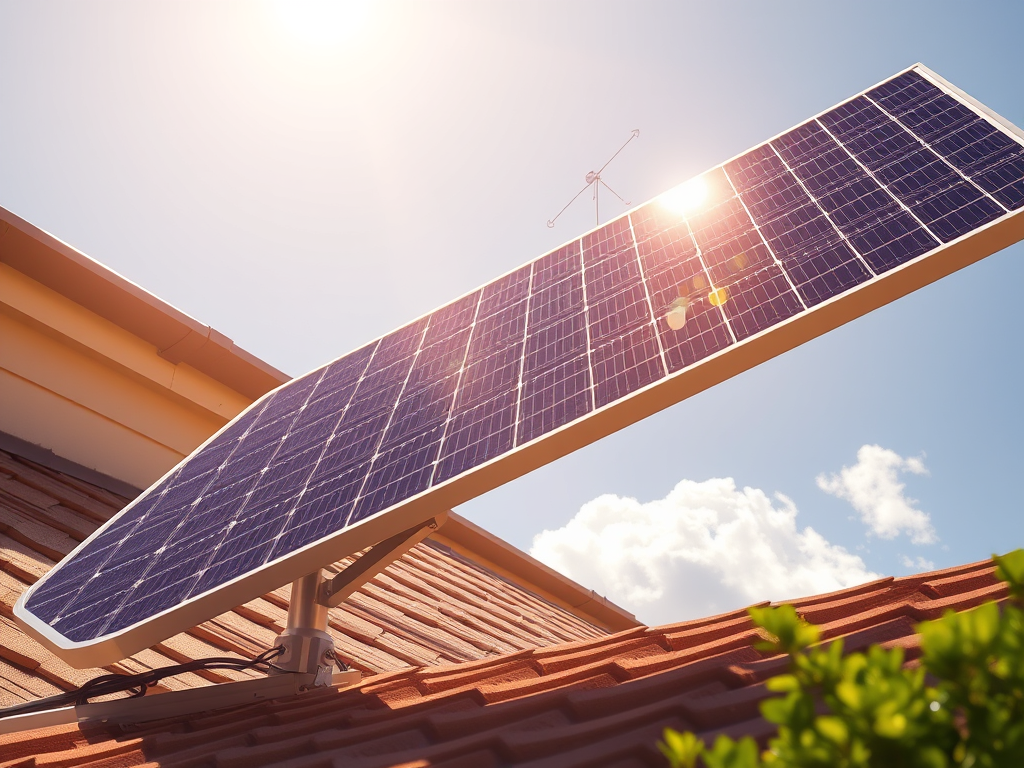
You installed a perfect light in a sunny spot, but it’s underperforming. The culprit is almost always panel orientation. The sun isn’t a stationary bulb in the sky; it’s a moving arc. A solar panel performs best when its face is perpendicular to the sun’s rays. Fixed, non-adjustable panels get this perfect alignment for only a brief moment each day.
For most of the continental US, the ideal fixed orientation is true south (not magnetic south—use a compass app with declination adjustment). The panel should be tilted upward at an angle roughly equal to your latitude. In Miami (25°N), a 25-degree tilt. In Chicago (41°N), a 41-degree tilt. This maximizes annual average collection.
But here’s the practical hack: Seasonal adjustment. In winter, the sun is low on the horizon. Increasing the tilt angle captures more of the weak winter sun. In summer, decreasing the tilt prevents overheating and optimizes for the high sun. If your mounting bracket allows even two fixed settings—a “summer” and a “winter” angle—you can boost winter performance by 30% or more. It’s a five-minute, twice-a-year task with dramatic returns.
For the ultimate performance, seek out mounts with dual-axis adjustability—a ball joint or articulated arm. During your initial installation, you can fine-tune not just the south-facing angle, but also the east-west alignment to match the sun’s precise path across your specific site, accounting for obstructions. This is the difference between “it works okay” and “it works shockingly well, even in February.” Treat the panel like a satellite dish searching for the strongest signal. That signal is free. Your job is just to point the receiver correctly.