Canada
 USA
USA Japan
Japan

Smart Sensors vs. Dumb Triggers: Motion Detection That Doesn’t Cry Wolf

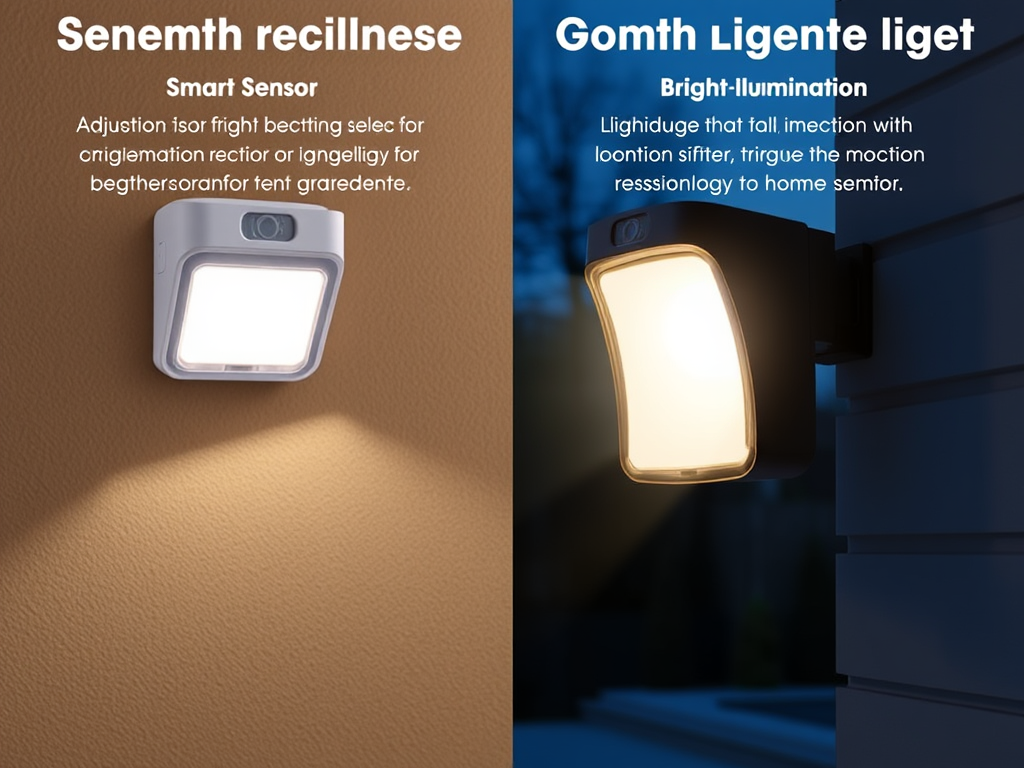
A hyper-sensitive motion sensor is a curse. The light that flares every time a cat ambles by or a branch sways teaches your family to ignore it—the very definition of a failed security device. Intelligent sensing is about discrimination and timing, not raw detection.
Look for lights with three adjustable settings, usually via small dip switches or a companion app:
Sensitivity Range: Can you dial it from “airplane landing” down to “human-sized object only”? A good sensor lets you set a detection zone, ignoring the public sidewalk beyond your property line but catching anyone stepping onto your driveway.
Duration Timer: Once triggered, how long does it stay on? 30 seconds is often too short (you’re left in the dark while fumbling with keys). 10 minutes is wasteful. The sweet spot is an adjustable 1-5 minute window, or better yet, a setting that keeps the light on at a low “ambient” level after the bright motion-triggered burst.
Dual-Brightness Mode: This is the hallmark of a thoughtful design. The light maintains a very low, energy-sipping “standby” glow (e.g., 10% brightness) from dusk to dawn for continuous pathway safety. When motion is sensed, it surges to 100% for the duration you set, then returns to its gentle glow. This provides constant usefulness without the jarring, energy-gobbling on/off cycling of a dumb light.
The latest evolution is radar-based sensing (often listed as “mmWave”) instead of traditional Passive Infrared (PIR). PIR detects heat differentials (warm body vs. cool background). Radar detects minute movement and can even sense through light materials. It’s far less likely to be triggered by blowing leaves (which have no heat signature for PIR anyway) and more reliable at longer ranges. If you have a long driveway or a large yard, seek out radar-based solar lights. They cost more but deliver military-grade detection without the false alarms that make neighbors roll their eyes.