Canada
 USA
USA Japan
Japan

Maximize Solar Lighting Efficiency with Remote Panels

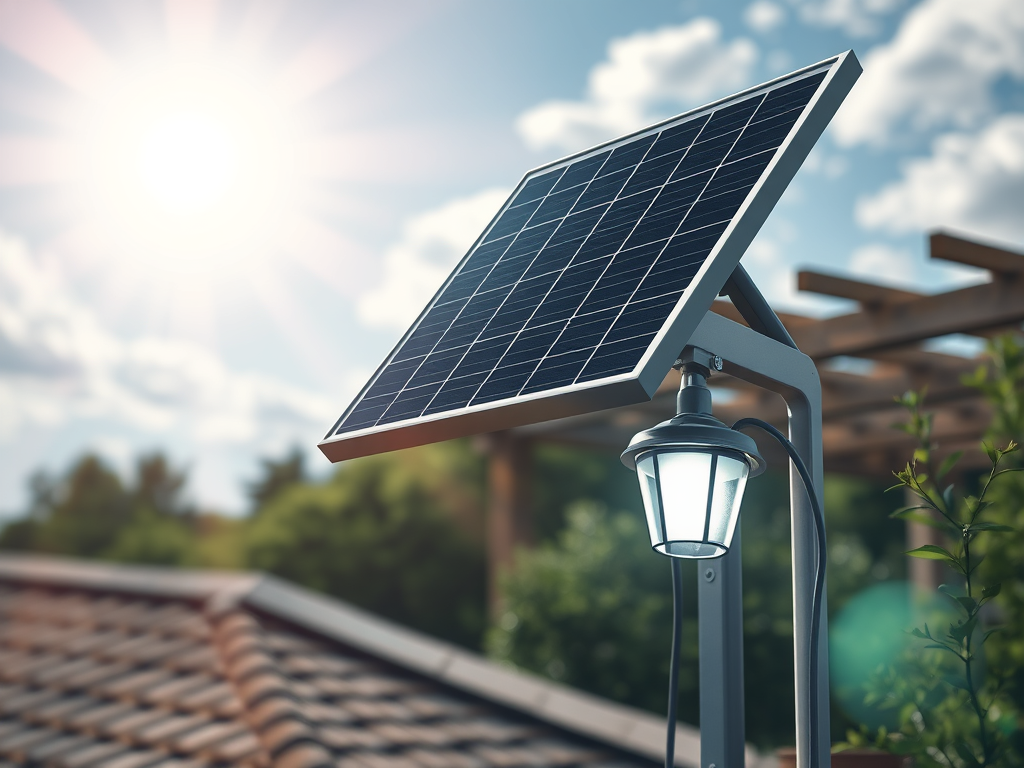
The seductive simplicity of an all-in-one solar light—panel on top, light below—is its greatest flaw. It forces a critical compromise: the panel must be exactly where the light needs to be. In the world of illumination, these are often mutually exclusive needs.
Light is needed in darkness: under eaves, in tree-canopied pathways, on north-facing walls. Sunlight is abundant in openness: on roof peaks, in the center of a lawn, on a south-facing fence. An integrated unit tries to serve both masters and fails at both. The panel is too small because it can’t dominate the fixture’s design, and it’s often placed in suboptimal sun.
The solution is decoupling. Look for systems with a remote panel connected by a 10 to 20-foot cable. This changes everything. Now you can mount the panel in a full-sun “solar sanctuary”—a spot you identified in your audit that gets unfettered rays from 10 AM to 4 PM. Meanwhile, the light fixture itself can be placed in the perfect architectural or safety location—a dark corner, under a pergola, facing exactly down your driveway.
This also allows for a larger panel. Instead of a 2-inch square, you can have a 6×8 inch rectangle, capturing 10 times the solar energy. More energy means a larger battery can be fully charged even on cloudy days, and the light can run at full brightness for longer durations. It transforms solar lighting from a weak, decorative afterthought into a primary, reliable light source capable of true security illumination and task lighting.
The installation is slightly more involved, requiring you to discreetly run a thin, low-voltage cable from the sun spot to the dark spot. But this is a one-time task that pays a dividend of perfect performance every single night. It’s the fundamental design shift that separates toys from tools.