Canada
 USA
USA Japan
Japan

How to Choose Reliable Solar Lights for Your Garden

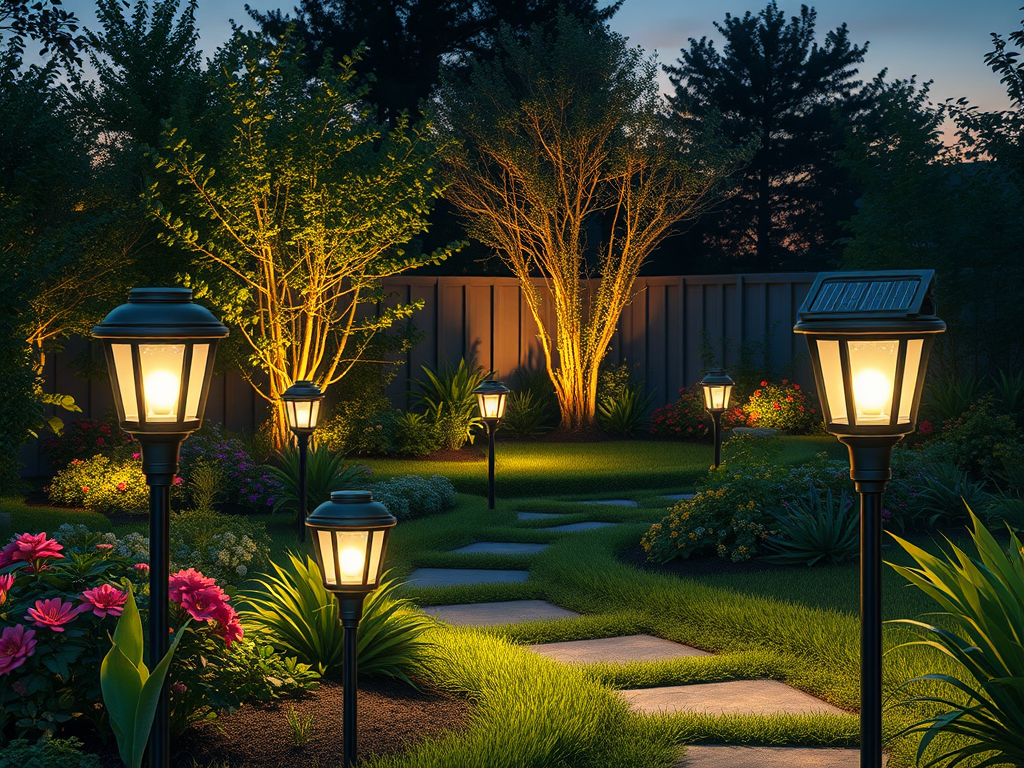
We’ve all seen those “dollar-per-light” solar stakes at the checkout aisle. You buy them. They’re dim for a week. They die. You swear off solar. I did that, too.
But what if I told you that real solar lighting—the kind that can replace your wired fixtures for good—isn’t a gadget, but a legit home upgrade? After wasting money on three sets of “bargain” lights, I finally figured it out. Here’s the no-BS guide I wish I’d had.
- Ignore “Lumens.” Look for “Lux Hours.”
This is the biggest rookie mistake. A box might scream “1000 LUMENS!” but if the battery is the size of a watch battery, that brightness lasts six minutes. You want to know: How bright, for how long? Look for “Run Time” specs at different brightness levels. A good light will offer 8-12 hours of “pathway level” light after a full charge. If the specs don’t list run time, put the box down. - The Panel Isn’t an Accessory. It’s the Engine.
Forget the little dime-sized panel on top of a plastic flower. For serious light, you need a separate, larger panel (at least the size of a paperback book) connected by a wire. This lets you place the panel in full sun and the light in shadow. The panel should have a high-efficiency monocrystalline cell. Tip: Rub the surface. It should feel like smooth, hard glass, not plastic. - “All-Weather” is a Lie. Look for These Two Words.
“All-weather” means nothing. You need an IP (Ingress Protection) Rating. For the ground, look for IP65 (dust-tight, protected against water jets). For submersible path lights, you need IP67 or IP68. This number is usually in the fine print on the back of the box. If it’s not there, assume it’s for indoor use only. - Your Location Dictates Your Battery.
Batteries hate extreme cold and heat. If you’re in the Sun Belt, you need lights with LiFePO4 (Lithium Iron Phosphate) batteries. They cost more but won’t fry in 100°F heat. For cold climates, standard Lithium-ion is okay, but check the low-temperature operating limit (good ones work down to -4°F). Avoid lights with non-replaceable, sealed batteries. In 2-3 years, the battery will degrade. Being able to swap in a new one turns a disposable product into a permanent fixture. - Do a “Sun Audit” Before You Buy.
Walk your yard at 10 AM, 2 PM, and 5 PM. Where is there consistent, direct sun for at least 6 hours? That’s your panel placement zone. No amount of money can buy sunlight that doesn’t hit your property. If your intended spot is shaded, you must buy a system with a remote panel on a long cable. - The Installation “Feel” Test.
When you unbox it, it should feel substantial. The housing should be metal or thick, UV-resistant polycarbonate (thin plastic turns brittle and yellow in a season). The mounting hardware should be stainless steel. If it feels cheap in your hands, it will fail on your wall.
The Mindset Shift:
Stop thinking “I’m buying a light.” Start thinking: “I’m buying a miniature, self-contained power plant that produces light.” You’re paying upfront for a decade of free fuel. The goal isn’t to find the cheapest option, but the one you’ll forget about—because it just works, summer after summer, bill after bill-less bill.
When you get it right, the magic isn’t in the tech. It’s in the forgotten-ability. It’s walking out into your glowing garden on a Tuesday in August and realizing you haven’t thought about those lights, their cost, or their function in months. They’ve just become part of your home, quietly powered by a day you didn’t even notice was particularly sunny. That’s the real win.