Canada
 USA
USA Japan
Japan

Upgrade Garage Lighting for Efficiency and Savings

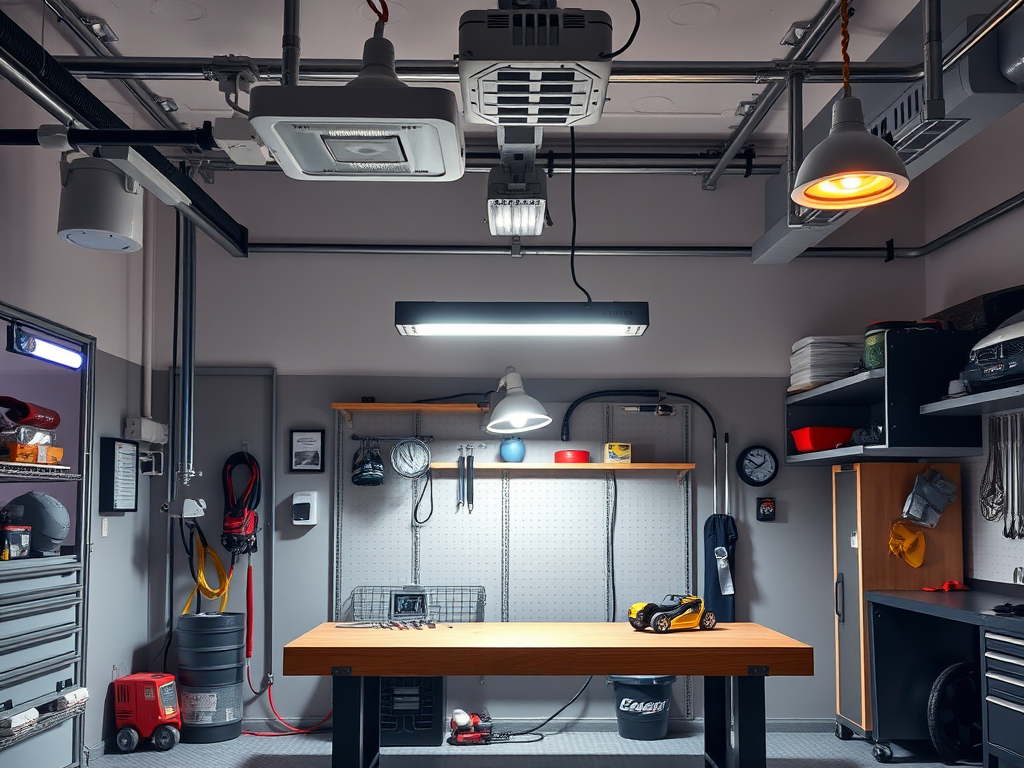
Guys, we need to talk about garage lighting. It’s probably the biggest waste of electricity in your house, and you don’t even realize it.
Here’s what most of us have: Two bare bulb sockets with 100-watt incandescents. Maybe a fluorescent shop light if you’re fancy. You flip them on when you pull in at 6 PM, and they burn until you remember to turn them off at 10.
Those two bulbs? 200 watts. Four hours a day = 0.8 kWh. Times 30 days = 24 kWh. At 14 cents/kWh, that’s $3.36/month just to light your garage.
Sounds small until you realize: That’s $40/year. For two bulbs. That you use maybe 10 minutes of those four hours.
Here’s the fix:
Step 1: Motion sensors. $15 at Home Depot. Screw it into the socket, screw your bulb into it. Light comes on when you enter, turns off 10 minutes later. Now those bulbs only run when you’re actually out there.
Step 2: LED high-bays. If you’ve got high ceilings, these are magic. A 50-watt LED high-bay replaces a 250-watt metal halide. Brighter light, one-fifth the energy. I installed two in my 3-car garage. My electrician buddy laughed at me until he saw my lighting bill drop $15/month.
Step 3: Task lighting. Why light the whole garage when you’re just working at the bench? $20 LED shop light over the workbench. Pull-chain or smart plug. Light only what you’re using.
Step 4: The door opener hack. That little bulb in your opener? It’s always on when the door’s up. Switch to LED, and it uses 90% less energy. Plus it won’t burn out from vibration.
My garage setup cost me $180 total. Annual savings: About $65. Paid back in under three years. But more importantly:
I can actually see what I’m doing
No more waiting for fluorescents to warm up in winter
The motion sensors make it feel futuristic
My tools are easier to find
And here’s the best part: When you have good lighting, you actually use your garage. I started fixing small things instead of paying mechanics. That saved me hundreds more.
Your garage shouldn’t be a money pit. For less than the cost of a tank of gas, you can turn it from an energy hog into an efficient, usable space.