Canada
 USA
USA Japan
Japan

How LED Technology is Reducing Energy Bills

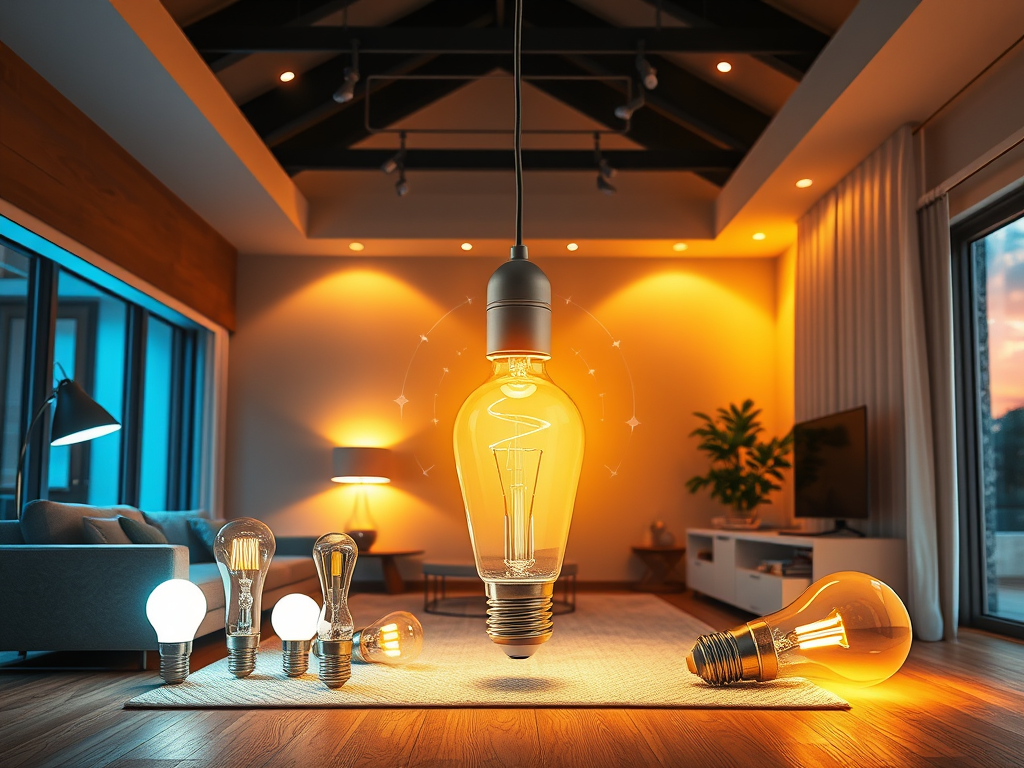
The LED revolution is far from over. The technology that has already reshaped our homes and businesses continues to evolve, promising even greater efficiency, integration, and intelligence. For the American consumer, this means the trajectory of savings is still pointing upward. Let’s explore what’s on the horizon for LED lighting and how it will further erode your electricity bill.
- Efficiency Frontiers: Pushing Lumens per Watt Even Higher
Research labs are consistently breaking records for LED efficiency. While commercial bulbs now offer 80-100 lumens per watt, experimental LEDs have surpassed 200 lumens per watt. As these technologies trickle down to the consumer market, we could soon see a standard “60-watt equivalent” bulb using not 9 watts, but 4 or 5 watts. This would cut the already-low energy use of today’s LEDs in half again. - Human-Centric Lighting (HCL) and Tunable White
The next step isn’t just about saving energy, but about optimizing light for our well-being. Tunable white LEDs allow you to adjust the color temperature throughout the day—emulating the stimulating cool blue of morning light to boost alertness, shifting to neutral white for focused work, and fading to warm, amber tones in the evening to support melatonin production and prepare for sleep. This biological alignment can improve circadian rhythms, sleep quality, and productivity, creating a healthier home environment that also uses energy only as needed. - Li-Fi (Light Fidelity) – Data Through Light
Imagine your LED light bulb doing double duty as a wireless router. Li-Fi is an emerging technology that modulates LED light at ultra-high speeds, imperceptible to the human eye, to transmit data. It promises speeds far greater than Wi-Fi, with higher security (light doesn’t pass through walls), and no electromagnetic interference. While still in early stages, it points to a future where your lighting infrastructure is also your data infrastructure, providing a valuable service beyond illumination. - Advanced Materials: Perovskite LEDs & Micro-LEDs
Perovskite LEDs: These are a new class of semiconductor materials that are cheaper to produce and can be tuned across the visible spectrum with high color purity. They could lead to even lower-cost, higher-quality LEDs in the coming decade.
Micro-LEDs: These are microscopic LEDs used for direct-emissive displays (like next-gen TVs and wearables), but the technology also allows for incredibly thin, flexible, and efficient lighting panels that could replace entire ceilings with a uniform, glare-free glow.
- Deeper Integration with the Smart Grid and Renewable Energy
Future LED systems won’t just respond to you; they’ll respond to the grid. Demand-response ready lighting could automatically dim slightly during periods of peak grid stress (in exchange for a credit from your utility), helping to stabilize the energy system. Furthermore, as homes adopt solar plus battery storage, ultra-efficient LED lighting becomes a perfect partner, minimizing the home’s baseline load and allowing stored solar energy to go further, potentially enabling greater energy independence. - Sustainability and Circular Design
The focus is shifting to the full lifecycle. Manufacturers are working on LEDs that are easier to disassemble and recycle, use fewer rare-earth materials, and have even longer lifespans. The goal is a truly circular economy for lighting.
For the homeowner, this ongoing innovation means three things: 1) The bulbs you buy today will keep getting cheaper and better. 2) Future upgrades will offer even more control and health benefits alongside efficiency. 3) Your initial investment in LED technology is future-proof, as the standard sockets (like E26) and basic protocols (like dimming) will remain compatible. The journey from the incandescent filament to the intelligent, networked light source is still unfolding, and the destination promises a world where light is more personal, more connected, and more miserly with electricity than ever before.