Canada
 USA
USA Japan
Japan

Transform Your Home: Smart LED Lighting Benefits

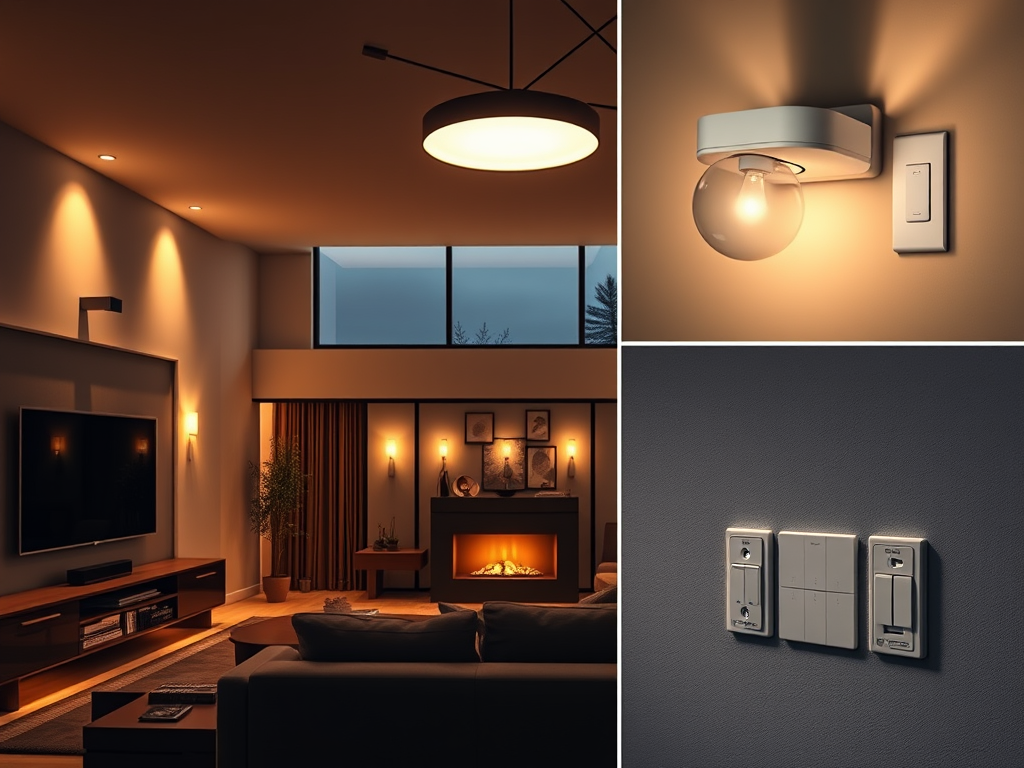
Replacing a standard bulb with an LED is a great first step. But pairing that LED with smart technology unlocks a new dimension of savings, convenience, and control that can dramatically amplify your reduction in electricity usage. This isn’t science fiction; it’s affordable, mainstream technology that turns your lighting from a manual utility into an automated, optimized system.
The Core Idea: Eliminate Wasteful Usage. The biggest waste of lighting energy isn’t an inefficient bulb—it’s an efficient bulb left on in an empty room. Smart LED systems solve this.
- Automation & Scheduling:
Set It and Forget It: Program your outdoor lights to turn on at dusk and off at dawn, or your interior lamps to turn off automatically at 11 PM. No more wondering if you left the garage light on.
Vacation Mode: Mimic your presence by having lights turn on and off at varying times while you’re away, enhancing security without wasting energy 24/7.
- Motion and Occupancy Sensing:
Smart bulbs or switches can be paired with sensors so lights turn on only when a room is occupied and turn off automatically after a period of inactivity. This is perfect for laundry rooms, bathrooms, closets, hallways, and kids’ rooms. The savings here are pure gravy on top of the LED efficiency.
- Remote Control and Voice Integration:
Forgot to turn off the basement light after doing laundry? Use your smartphone app to switch it off from your bed. Integration with Amazon Alexa, Google Assistant, or Apple HomeKit allows for voice control (“Hey Google, turn off all the downstairs lights”), making it effortless to manage your home’s lighting footprint.
- Advanced Dimming and Scenes:
Go beyond simple on/off. Create “scenes” like “Movie Night,” which dims all the living room lights to 10% with one command. Since dimming an LED reduces its power consumption nearly linearly (a bulb at 50% brightness uses roughly 50% of the power), these fine-tuned controls yield additional savings and extend the bulb’s lifespan even further.
- Energy Monitoring:
Many smart home platforms provide data on how much energy your devices are using. You can see, in real dollars, how much your smart LED lighting system is saving you each month, providing satisfying, tangible feedback.
Getting Started: Two Main Paths
Smart Bulbs: These are LEDs with built-in Wi-Fi, Zigbee, or Bluetooth radios (e.g., Philips Hue, LIFX). You screw them in, connect them to a hub or your router, and control them via an app. They’re incredibly flexible but can be more expensive per bulb.
Smart Switches/Dimmers: These replace your existing wall switches (e.g., Lutron Caséta, Kasa Smart). Once installed, they control any standard (dimmable) LED bulb you put in the fixture. This is often a more cost-effective solution for controlling many bulbs in a single room (like a kitchen with six recessed lights).
The Bottom-Line Impact: While a smart LED bulb uses a tiny amount of standby power (a fraction of a watt), the savings from eliminating wasted “on-time” far outweigh this cost. It’s not uncommon for a smart lighting system to reduce a home’s lighting-related energy use by an additional 30-40% on top of the savings from the LED efficiency itself.
In essence, smart LEDs move you from passive consumption to active management. They ensure light is delivered exactly when and where it’s needed, and at the appropriate level. This synergy of high efficiency and intelligent control represents the ultimate strategy for minimizing your lighting’s line on the electricity bill.