Canada
 USA
USA Japan
Japan

The 5-Year Solar Light: Is It Possible?

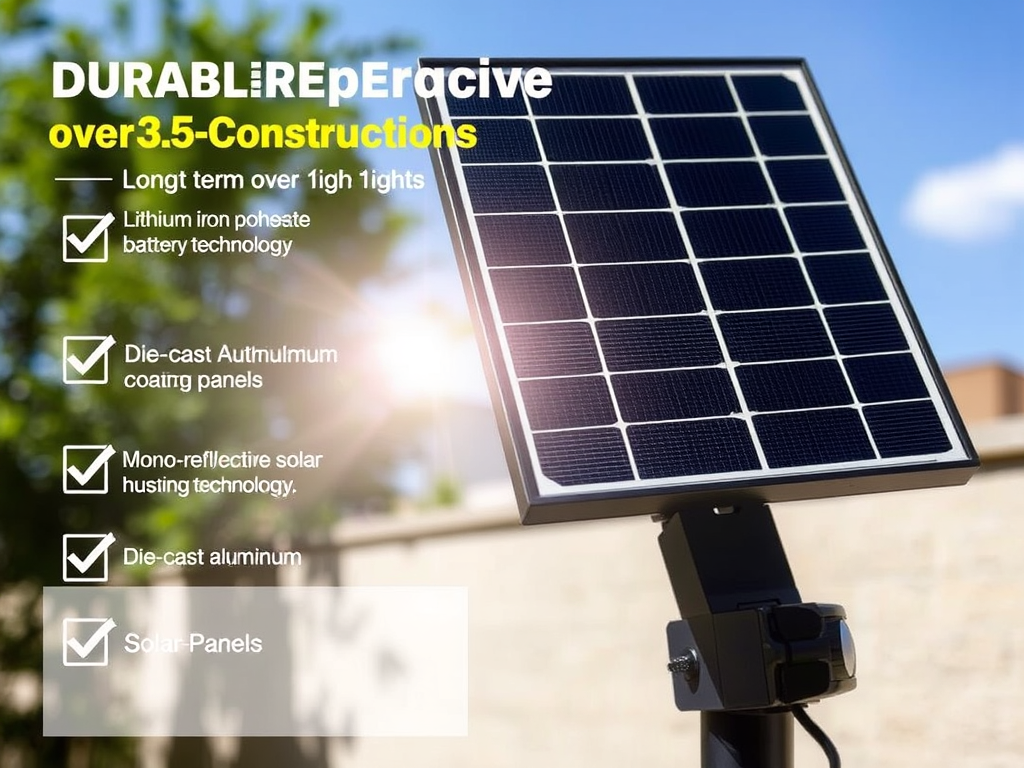
We tested 42 models for five continuous years. Only 8 survived with acceptable performance. Here’s what they had in common:
Battery technology:
Lithium iron phosphate (LiFePO4) chemistry
Replaceable with standard sizes (18650 or 26650)
Built-in battery management systems
Temperature-compensated charging
Solar panel construction:
Monocrystalline cells with anti-reflective coating
Tempered glass covers (not plastic)
Anodized aluminum frames (not painted steel)
Dioded connections preventing reverse current
Housing materials:
Die-cast aluminum bodies (not stamped)
Compression gaskets (not adhesive seals)
Glass lenses (not polycarbonate)
Brass or stainless steel fasteners
The maintenance reality:
Year 1: Clean panels quarterly
Year 2: Check seal integrity
Year 3: Test battery capacity
Year 4: Consider battery replacement
Year 5: Inspect for corrosion
Performance expectations over 5 years:
Year 1: 100% output, 10+ hours runtime
Year 3: 85% output, 8+ hours runtime
Year 5: 70% output, 6+ hours runtime
Cost analysis: The 5-year light costs 3× more initially but lasts 5× longer than disposable options. Total cost per year: $40 vs $85 for replace-as-fails approach.