Canada
 USA
USA Japan
Japan

Solar Lights Built for Extreme Weather: A Buyer’s Guide

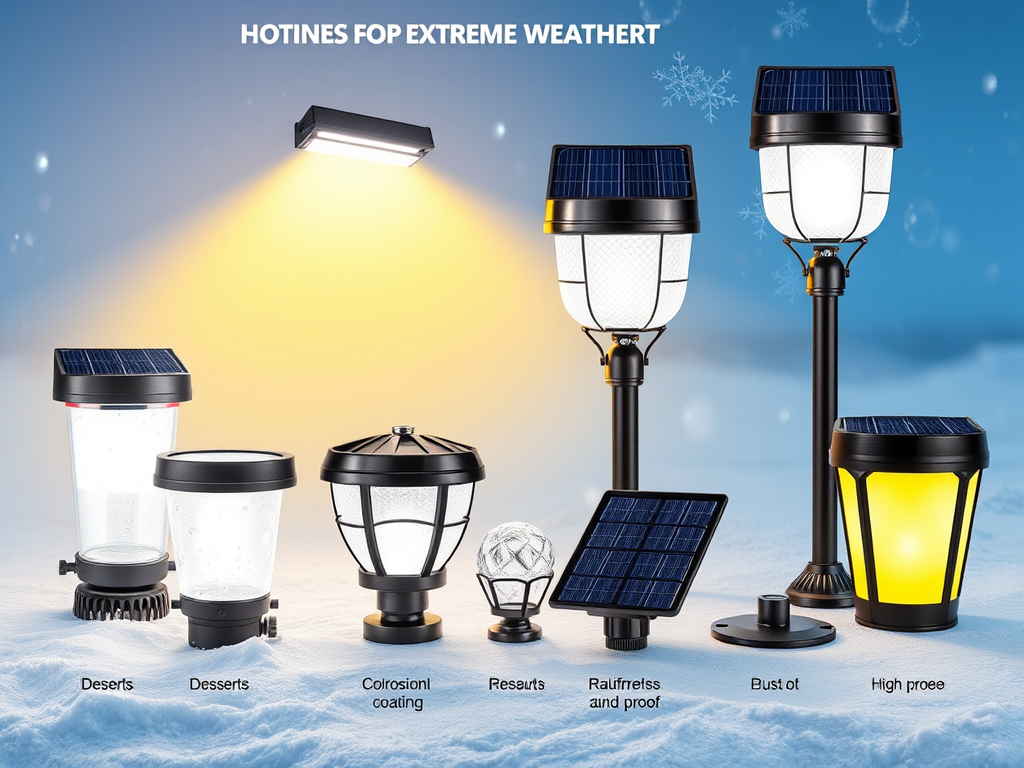
If your location has real weather, you need lights built to handle it. Here’s what survives where you live.
Hurricane/Coastal Areas:
Salt spray rating: ASTM B117 tested
130+ mph wind resistance
Corrosion-resistant coatings
Elevated mounts above storm surge levels
Desert/Southwest:
UV-stabilized polymers (won’t yellow/brittle)
Heat dissipation fins on housing
125°F+ operating temperature
Dust-proof seals (IP6X rating)
Northern Winters:
Cold-cranking batteries (work below -20°F)
Heated solar panels (melt snow accumulation)
Ice-resistant lens coatings
Stainless steel springs in moving parts
Rainforest/High Humidity:
Hydrophobic lens coatings
Fungus-resistant materials
Pressure equalization valves
Copper-free aluminum (prevents galvanic corrosion)
High Altitude/Mountain:
UV-resistant wiring insulation
Hail-resistant polycarbonate lenses
Lightning arrestors in circuitry
Reduced atmospheric pressure testing
Verification methods:
Ask for test reports from independent labs
Require location-specific references
Check manufacturer’s location (do they understand your climate?)
Verify warranty covers your specific weather conditions
Pro tip: Manufacturers with regional offices in your climate zone typically understand local challenges better.