Canada
 USA
USA Japan
Japan

Color Temperature Matters: Warm White vs. Cool White Solar Lights

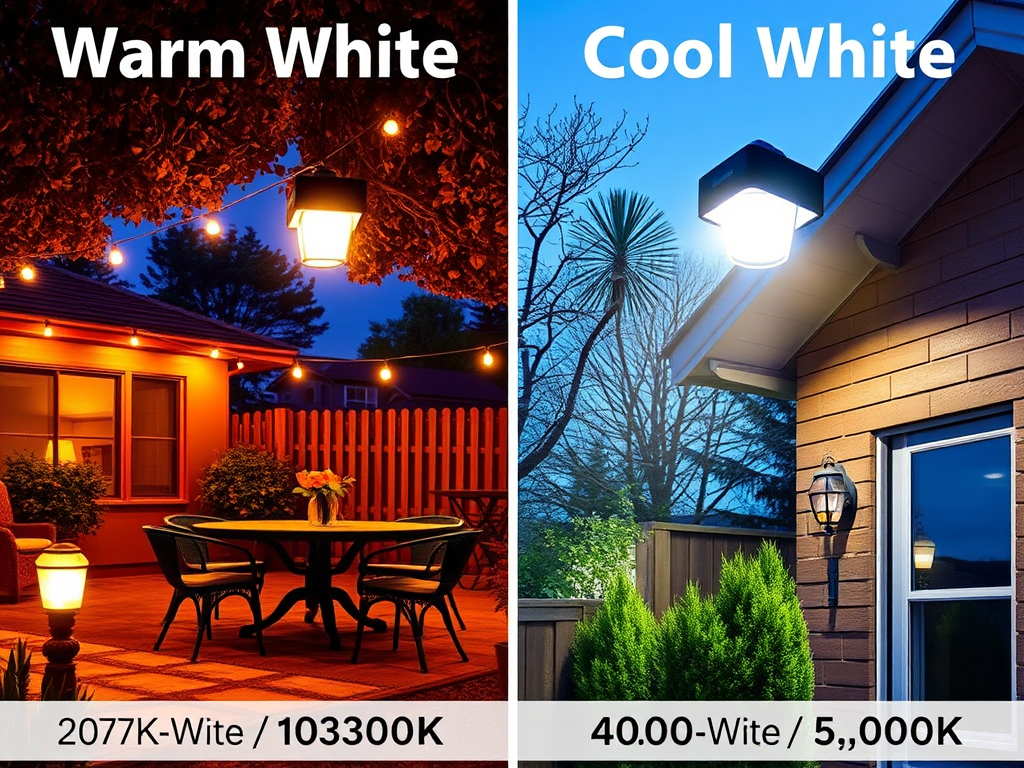
This choice affects more than aesthetics—it influences mood, insect attraction, and even perceived brightness.
Warm White (2700-3000K):
Mimics sunset/incandescent glow
Creates cozy, intimate atmosphere
Reduces insect attraction by 40-60%
Makes reds, browns, and wood tones richer
Ideal for dining, seating, and relaxation areas
Cool White (400-5000K):
Similar to midday sunlight
Increases alertness and visibility
Enhances blues, greens, and grays
Better for security and task areas
Can feel sterile in living spaces
Natural White (3500-4000K):
Balanced compromise
Good for pathways and multi-use areas
Minimal color distortion
Professional, clean appearance
Our field findings:
Restaurants use 2700K for patio dining—customers stay longer
Retail displays use 4000K—products appear vibrant
Homeowners prefer 3000K for most outdoor applications
The insect factor: LED lights attract fewer insects than traditional bulbs, but cool white still attracts 2-3 times more than warm white.
Mix strategically: Use warm white in living areas, cool white for security zones, natural white for transitions. Quality systems allow separate control of different temperature zones.
Test before committing: Buy one light of each temperature. View them in your actual space at night before purchasing entire sets.