Canada
 USA
USA Japan
Japan

The Truth About Solar Light Motion Sensor Range

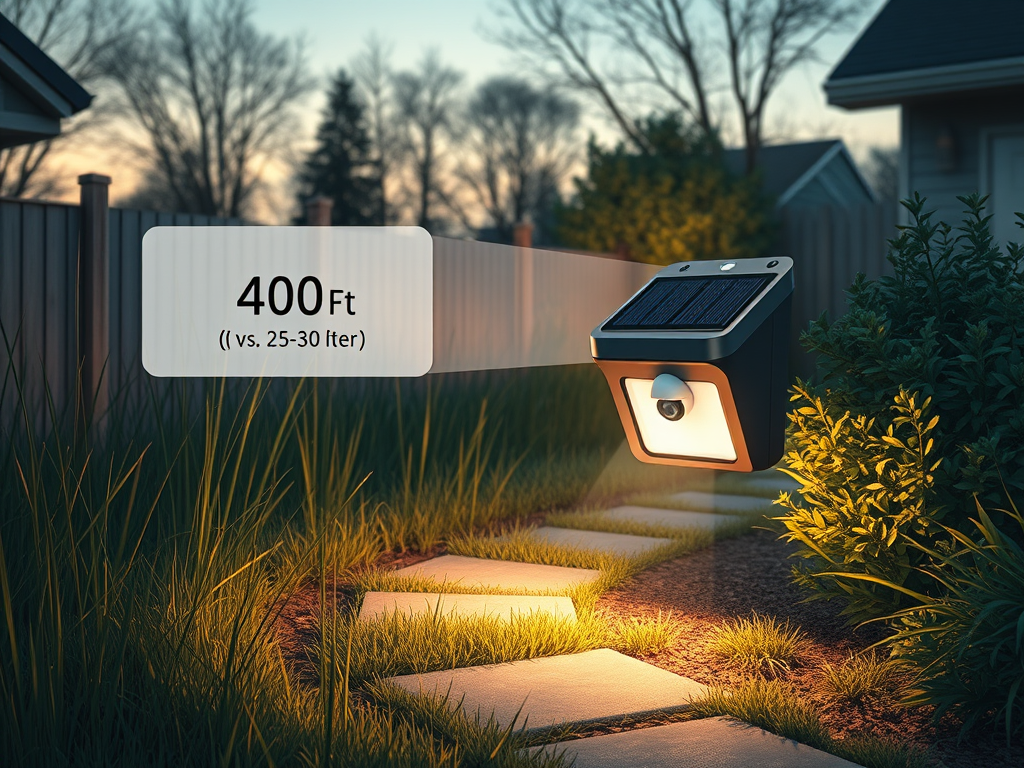
Here’s what frustrates smart buyers: advertised ranges versus real performance. Manufacturers claim “40-foot detection” but don’t mention that’s under laboratory conditions.
Reality check from our field tests:
40-foot advertised range = 25-30 feet in real yards
Detection narrows significantly in rain or fog
Tall grass or shrubs can reduce range by 50%
The angle deception: A “wide 120° sensor” sounds impressive until you realize motion must cross the sensor’s detection pattern. Peripheral detection is weaker—intruders approaching from the edges often trigger the light later than those approaching head-on.
Temperature affects performance: In Arizona heat (100°F+), sensors can become overly sensitive, triggering on heat waves. In Minnesota winters (-10°F), response time slows by 1-2 seconds until the unit warms up.
Solutions that work:
Buy for 50% more range than you need
Choose adjustable sensitivity to fine-tune for your environment
Install multiple units with overlapping coverage instead of relying on one “super light”
Pro tip: Test at night with a family member walking various approaches. Mark where activation occurs with glow-in-the-dark stakes. You’ll quickly see your actual coverage.