Canada
 USA
USA Japan
Japan

Navigating the Maze: Essential Safety Certifications for Solar Street Lights (UL, IEC, CE)

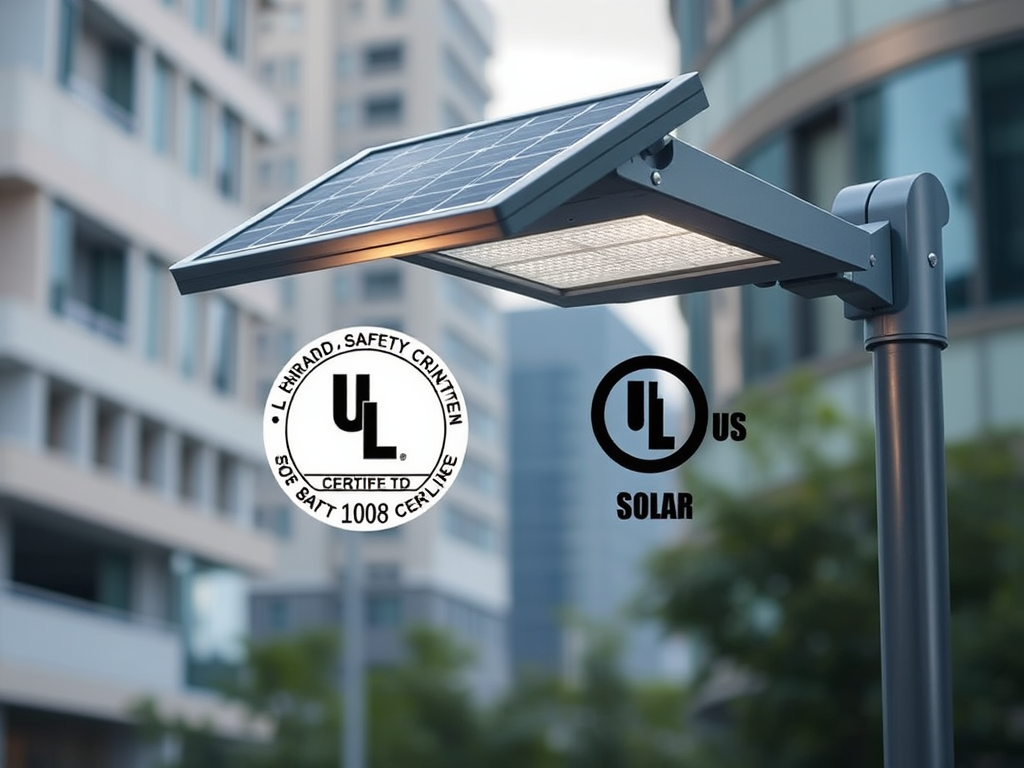
Not all solar lights are built safely. Learn which certifications (UL 8800, IEC 62776) are non-negotiable for liability and performance in commercial projects.
When sourcing solar street lights for a public or commercial project, product safety and reliability are paramount. Beyond marketing claims, independent certifications are your only objective guarantee that a product has been tested to rigorous international standards. Ignoring them can lead to system failure, safety hazards, and massive liability.
Why Certifications Matter:
Risk Mitigation: Certified components (especially batteries) are tested for electrical, thermal, and mechanical safety, reducing fire risk.
Performance Verification: Certifications ensure the product performs as advertised (e.g., actual lumen output, ingress protection).
Regulatory & Insurance Compliance: Many municipalities, utilities, and insurance providers require specific certifications for approval and coverage.
Professional Due Diligence: Specifying certified products protects your firm from liability if a failure occurs.
The Non-Negotiable Certifications for North America:
- UL 8800 – The Gold Standard for Solar Lighting Systems
What it is: A comprehensive standard from Underwriters Laboratories specifically for Grid-Isolated Solar Lighting Systems. It covers the entire system: LED, battery, controller, panel, and wiring.
What it tests: Electrical safety, battery system safety (overcharge, short circuit, thermal runaway), photobiological safety (blue light hazard), and environmental durability.
Why it’s critical: UL 8800 certification is becoming the de facto requirement for municipal bids in the US and Canada. It’s your strongest assurance of overall system safety.
- UL 1598 / UL 8750 – For LED Luminaires
UL 1598: Standard for luminaires (light fixtures). Ensures safe construction and wiring.
UL 8750: Standard for LED Light Sources. Ensures electrical and thermal safety of the LED array and driver.
Look for: The luminaire should be listed to both standards or the combined UL 1598A.
- IEC Standards (International & European Recognition)
IEC 62776: The international standard for stand-alone solar street lights, similar in scope to UL 8800.
IEC 60598 & IEC 62031: International equivalents for luminaire and LED safety.
IEC 62133: Critical standard for battery safety (especially for Lithium-based cells).
CE Marking: For the European market, this indicates conformity with health, safety, and environmental protection standards (which often harmonize IEC standards).
- IP & IK Ratings – Environmental Protection
While not a “certification” per se, these ratings must be verified by an independent lab.
IP65/IP66: Essential for the luminaire and battery box. Means “dust-tight” and protected against powerful water jets.
IK08-IK10: Impact resistance rating. IK10 can withstand 20 joules of impact (like a heavy rock).
The Certification Checklist for Your RFP (Request for Proposal):
When evaluating suppliers, demand the following test reports and listings:
Component Required Certification What to Ask For
Entire System UL 8800 or IEC 62776 Copy of the UL Certificate or IEC CB Scheme Test Report.
LED Luminaire UL 1598/8750 or IEC 60598/62031 UL Listing Number or IEC Test Report.
Battery Cells UL 1973 / UL 62133 / IEC 62133 Test report from a reputable lab (TUV, Intertek, UL).
Solar Panel UL 61730 (Safety) & UL 1703 (Performance) UL Listing for the specific panel model.
Ingress Protection IP65/IP66 (Verified) Independent test report, not a self-declaration.
Red Flags to Avoid:
Supplier says: “Our product is designed to meet UL standards.” (It should be listed/certified.)
Only a “CE Self-Declaration” with no supporting test reports.
Certifications only for individual parts, not the integrated system.
Fake or unverifiable certification marks on the website or product.
Investing in properly certified solar street lights is not an extra cost—it’s an essential insurance policy that protects your project, your community, and your professional reputation for decades.
Internal Link Suggestion: View all our certification documents and test reports in our public resource library.