Canada
 USA
USA Japan
Japan

Beyond Energy Savings: How Solar Street Lights Directly Contribute to Your ESG Goals

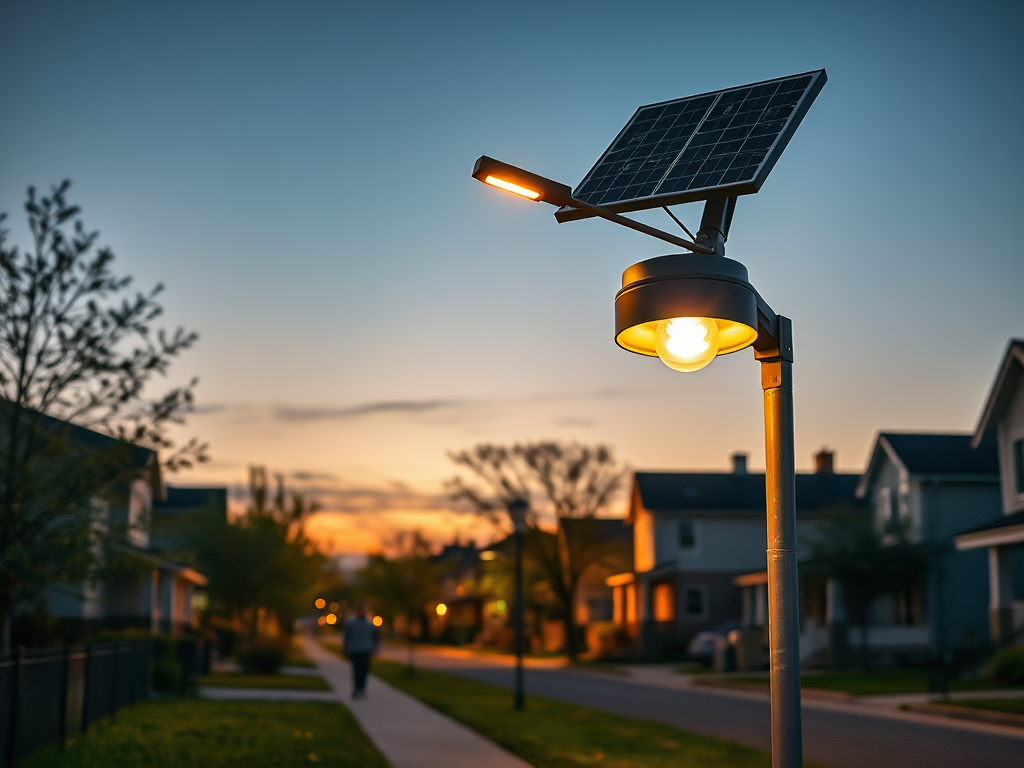
Solar street lights do more than cut bills. See the quantifiable ESG impact: carbon reduction, social benefits, and how to report it in your sustainability report.
For corporate sustainability officers and municipal planners, Environmental, Social, and Governance (ESG) metrics are no longer optional—they’re a critical part of operational reporting and public accountability. While solar street lights are known for cutting energy costs, their strategic value in advancing tangible ESG goals is often understated.
Here’s how a solar street lighting project translates directly into measurable ESG impact.
- Environmental Impact: Quantifiable Carbon & Resource Savings
Transitioning from grid-powered lights to solar is one of the most straightforward decarbonization projects.
Carbon Dioxide (CO2) Reduction:
A single 120W solar LED light operating 12 hours nightly replaces a 250W HID grid-powered equivalent.
Annual Grid Energy Avoided: ~1,095 kWh
*(Calculation: (0.25kW – 0kW) * 12 hrs * 365 days)*
Annual CO2 Avoided (U.S. Grid Avg.): ~0.78 metric tons
(Based on EPA avg. of 0.707 lbs CO2 per kWh)
Project Scale Impact: A 100-light project avoids ~78 metric tons of CO2 annually—equivalent to taking 17 gasoline-powered cars off the road for a year.
E-Waste & Toxicity Reduction:
Modern solar lights use long-life LiFePO4 batteries (5-8 years) and LEDs (100,000+ hours), drastically reducing replacement frequency compared to lead-acid batteries and HID lamps that contain mercury.
- Social Impact: Enhancing Community Equity & Safety
Light is a fundamental public good. Solar technology allows its equitable deployment anywhere.
Energy Equity: Provides high-quality lighting to off-grid and underserved communities without massive grid extension costs, supporting UN Sustainable Development Goal (SDG) 7 (Affordable & Clean Energy).
Public Safety: Reliable street lighting is correlated with up to a 39% reduction in nighttime crime (based on multiple urban studies) and a significant decrease in pedestrian and traffic accidents.
Resilience: Functions independently during grid outages caused by storms or disasters, providing critical community infrastructure and supporting SDG 11 (Sustainable Cities).
- Governance & Economic Impact: Transparency and Long-Term Value
Lifecycle Cost Transparency: Solar projects have predictable, fixed costs (CAPEX), eliminating volatile utility OPEX and simplifying municipal budgeting.
Reduced Liability: Eliminates risks associated with trenching near utilities and reduces future liability for maintenance of buried electrical lines.
Local Job Creation: Installation and maintenance create skilled green jobs for local electricians and technicians.
How to Report This in Your Sustainability/ESG Report:
Integrate solar lighting projects under relevant frameworks:
GRI Standards: GRI 302 (Energy) and GRI 305 (Emissions). Disclose energy consumption avoided and scope 2 emissions reduction.
SASB: For infrastructure sectors, report on the resilience and environmental impact of capital assets.
TCFD: Disclose how decentralizing energy infrastructure (like solar lighting) mitigates climate-related physical risks (grid failure) and transitions risks (energy price volatility).
Actionable Step: Work with your supplier to obtain a Project Impact Report that details the calculated kWh savings, CO2 emissions avoided, and lifecycle environmental analysis. This data is gold for your reporting.
Internal Link Suggestion: Request a free customized ESG Impact Report for your proposed project. Our team calculates your potential savings and emissions reduction