Canada
 USA
USA Japan
Japan

The Future is Bright: 5 Solar Street Light Trends Shaping 2024 and Beyond

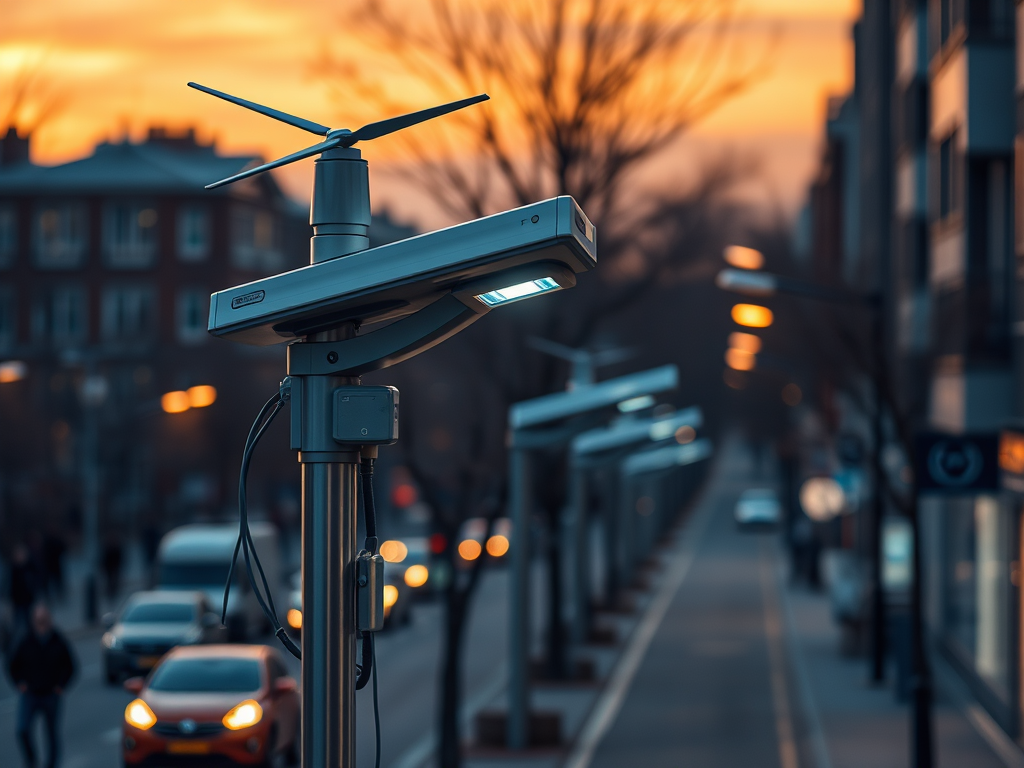
Discover the top 5 solar street light market trends for 2024. From smart controls to hybrid systems, learn how technology is revolutionizing outdoor lighting. Read our analysis.
The global solar street lighting market is projected to reach $14.2 billion by 2028, growing at a CAGR of 17.3%. This surge isn’t just about sustainability—it’s driven by rapid technological innovation and tangible economic benefits. For project managers, city planners, and business owners, staying ahead of these trends is key to making future-proof investments.
Here are the 5 pivotal trends defining the solar street light industry in 2024:
- The Rise of AI and Smart Adaptive Lighting
Gone are the days of simple on/off cycles. The latest systems integrate motion sensors, ambient light detectors, and predictive algorithms to optimize energy use. For instance, lights operate at 30% brightness on empty streets, surging to 100% when motion is detected. This can extend battery life by up to 40% and significantly reduce light pollution for communities. - Hybrid Solar-Wind Systems for Maximum Reliability
In regions with inconsistent sunshine, hybrid renewable systems are becoming the gold standard. By integrating a compact vertical-axis wind turbine, street lights can generate power even during prolonged cloudy periods or at night. This technology is a game-changer for coastal and high-latitude areas, ensuring uninterrupted public safety lighting. - Modular “Design-for-Repair” Components
Sustainability now encompasses the entire product lifecycle. Leading manufacturers are designing lights with swappable components—a failed battery or LED module can be replaced in minutes without dismantling the entire pole. This reduces long-term maintenance costs by up to 60% and minimizes electronic waste. - Integrated Public Amenity Hubs
Solar street poles are evolving into multi-functional hubs. We now see models incorporating:
EV Charging Sockets for electric cars and e-bikes.
Public Wi-Fi Hotspots and 5G small cells.
Emergency Buttons and environmental sensors (air quality, noise).
This transforms a simple lighting project into a smart city infrastructure investment.
- Advanced Battery Chemistry: Moving Beyond Lithium-Ion
While Lithium-Ion remains popular, new alternatives are emerging. Lithium Iron Phosphate (LiFePO4) batteries offer superior thermal stability, longer cycle life (over 4000 cycles), and perform better in extreme temperatures. For large-scale municipal projects, this translates to lower risk and a longer warranty period.
The Bottom Line for Buyers
When evaluating solar street lights in 2024, look beyond lumen output and price. Ask suppliers about:
The intelligence of the controller system.
Battery chemistry and projected lifespan under local climate conditions.
Modularity and warranty terms for individual components.
Potential for future add-ons like sensors or communication devices.
Investing in these next-generation solutions future-proofs your infrastructure and maximizes your return on investment.
Internal Link Suggestion: Ready to see these technologies in action? Explore our smart solar street light series with adaptive control