Canada
 USA
USA Japan
Japan

Understanding IP Ratings for Waterproof Lighting

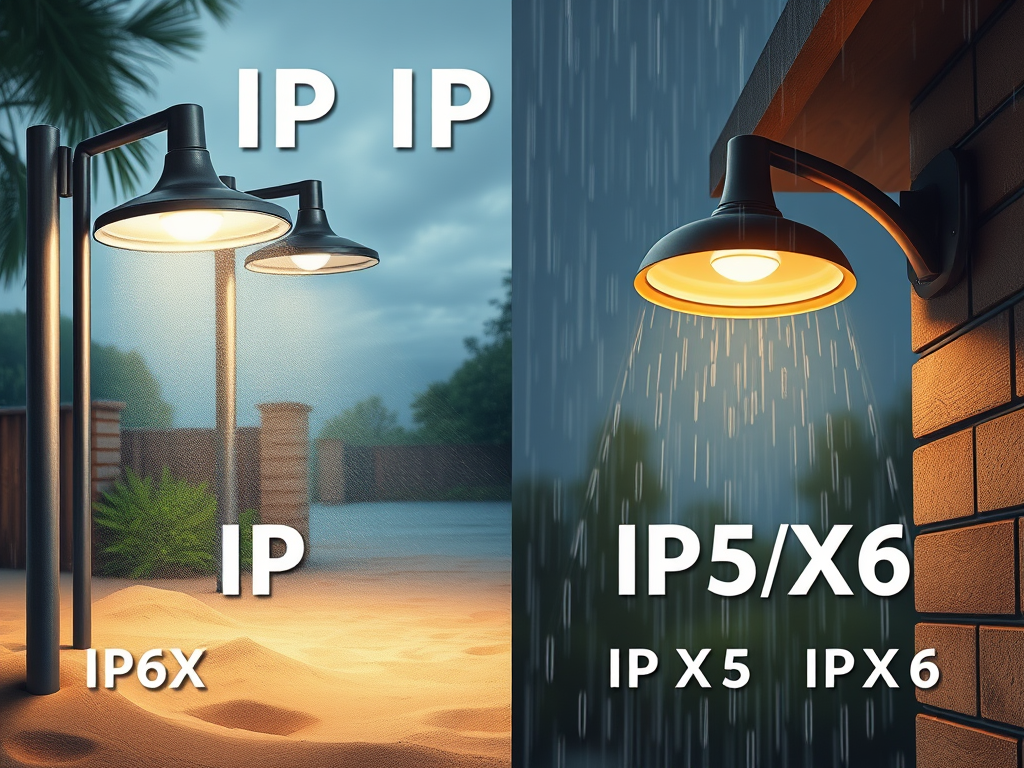
The term “weatherproof” is commercially meaningless. “Water-resistant” is even worse. They are unverified claims. To navigate this intentional vagueness, you must learn to speak the language of the International Protection (IP) Code. It’s a two-digit standard that tells you exactly what a enclosure can withstand.
The first digit (0-6) rates protection against solid particle ingress—dust. For outdoor lights, you want at least a 5. IP5X means “dust protected” – not totally dust-tight, but enough that blowing dust won’t interfere. IP6X is the gold standard: “dust-tight.” No dust gets in. This is crucial for sandy environments or near dirt paths.
The second digit (0-9) rates protection against liquids. This is where you separate patio lights from pond lights.
IPX4: Protected against water splashes from any direction. Okay for a covered porch.
IPX5/IPX6: Protected against low-pressure (IPX5) or high-pressure (IPX6) water jets. This is the minimum for any light fully exposed to rain and sprinklers.
IPX7: Protected against temporary immersion (up to 1 meter for 30 minutes). For lights that might get submerged in a flood or buried in snowmelt.
IPX8: Protected for continuous immersion under specified pressure. For pond or fountain lighting.
For most homeowners, IP65 is the sweet spot: dust-tight and jet-proof. For path lights that will be snow-blown or buried, IP67 is wise. This code is always in the technical specifications or molded into the product housing itself. If a company brags about being “weatherproof” but doesn’t publish an IP rating, they’re avoiding a test they know they’d fail. Consider it a major red flag. This code is your guarantee, not their promise.