Canada
 USA
USA Japan
Japan

Understanding LED Technology: Save on Your Electric Bill

To the average American, flipping a light switch is a simple act of faith. We trust that light will appear, and the meter will spin. But how that light is generated makes all the difference to your wallet. Understanding the core technology behind LEDs reveals why they are such potent tools for reducing your electricity bill. It’s not magic; it’s superior engineering that turns more of your paid electricity into visible light, not wasted heat.
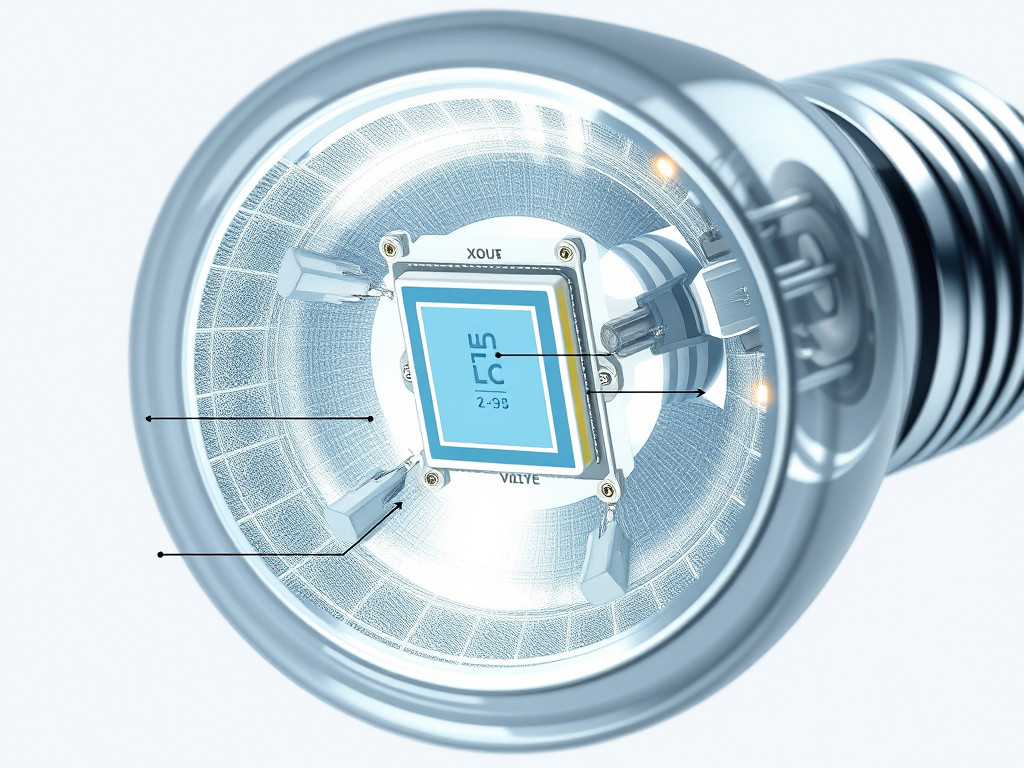
At the heart of an LED bulb is a semiconductor chip, a close cousin to the technology in your computer or smartphone. When an electrical current passes through this semiconductor material, it excites electrons, causing them to release energy in the form of photons—tiny particles of light. This process is called electroluminescence. It’s direct, efficient, and generates very little heat compared to the method used by old-fashioned bulbs.
Now, let’s contrast this with the technology it replaced. The traditional incandescent bulb, a design over a century old, relies on incandescence. It forces electricity through a thin, fragile filament (usually tungsten) inside a glass vacuum. The filament resists the current, heating up to a scorching 4,500 degrees Fahrenheit until it glows white-hot. The critical flaw? Over 90% of the energy consumed is wasted as radiant heat. You’re paying to heat a wire, with light as a mere byproduct. It’s profoundly inefficient.
This difference in efficiency is measured in lumens per watt—the amount of light you get for each unit of electricity. An incandescent bulb might produce a measly 15 lumens per watt. A modern LED bulb, however, delivers 80 to 100+ lumens per watt, with laboratory models reaching even higher. This isn’t a marginal improvement; it’s a five to seven-fold increase in efficiency. Every watt you pay for is doing much more work.
But the innovation doesn’t stop at the chip. LED bulbs are complex systems engineered for performance and longevity. Key components include:
The Heat Sink: Although LEDs are cool-running, the microchip itself is sensitive to heat. The aluminum fins or ceramic base you see on an LED bulb are heat sinks, actively drawing heat away from the chip to ensure a long life.
The Driver: This is the bulb’s internal power supply, converting your home’s AC current to the low-voltage DC current the LED chip needs. A quality driver is crucial for stable performance and flicker-free light.
The Diffuser/Optics: The plastic or glass dome softens and distributes the bright, directional light from the tiny chip into a wide, even glow suitable for room lighting.
This technological sophistication translates directly to your bottom line. Because an LED uses energy more intelligently, it requires less power input to create the same—or better—light output. When you see “60W Equivalent” on an LED package, it means the bulb gives the same brightness as a 60-watt incandescent but uses only 9-10 watts. That’s a direct 85% reduction in the demand on your circuit for that fixture. Scale this across your home, and the cumulative drop in power draw is significant enough to visibly lower your monthly consumption on your utility bill.
In summary, the journey from the heated filament to the semiconductor chip represents one of the most meaningful consumer technology shifts of our time. By choosing an LED, you’re not just buying a light source; you’re investing in a miniaturized, high-efficiency lighting system. It’s a triumph of solid-state physics that pays dividends with every hour it’s illuminated, quietly converting electricity into savings, not waste heat.